
- The Science
The science of cellular communication.
01 · Your body is electric
Not metaphorically. Literally.
Every major system in your body runs on measurable electrical signals. It’s the documented physiology your doctor already relies on every day.
86B neurons · ~200 firings / sec
Synaptic transmission
86 billion neurons firing 200x/sec
Your Nervous System
Touch something hot and sensory neurons fire at 250 mph to your spinal cord. Think a thought and electrical patterns activate across regions. Without electrical signals, your nervous system is offline.
60–100 electrical impulses / minute
Your Heart
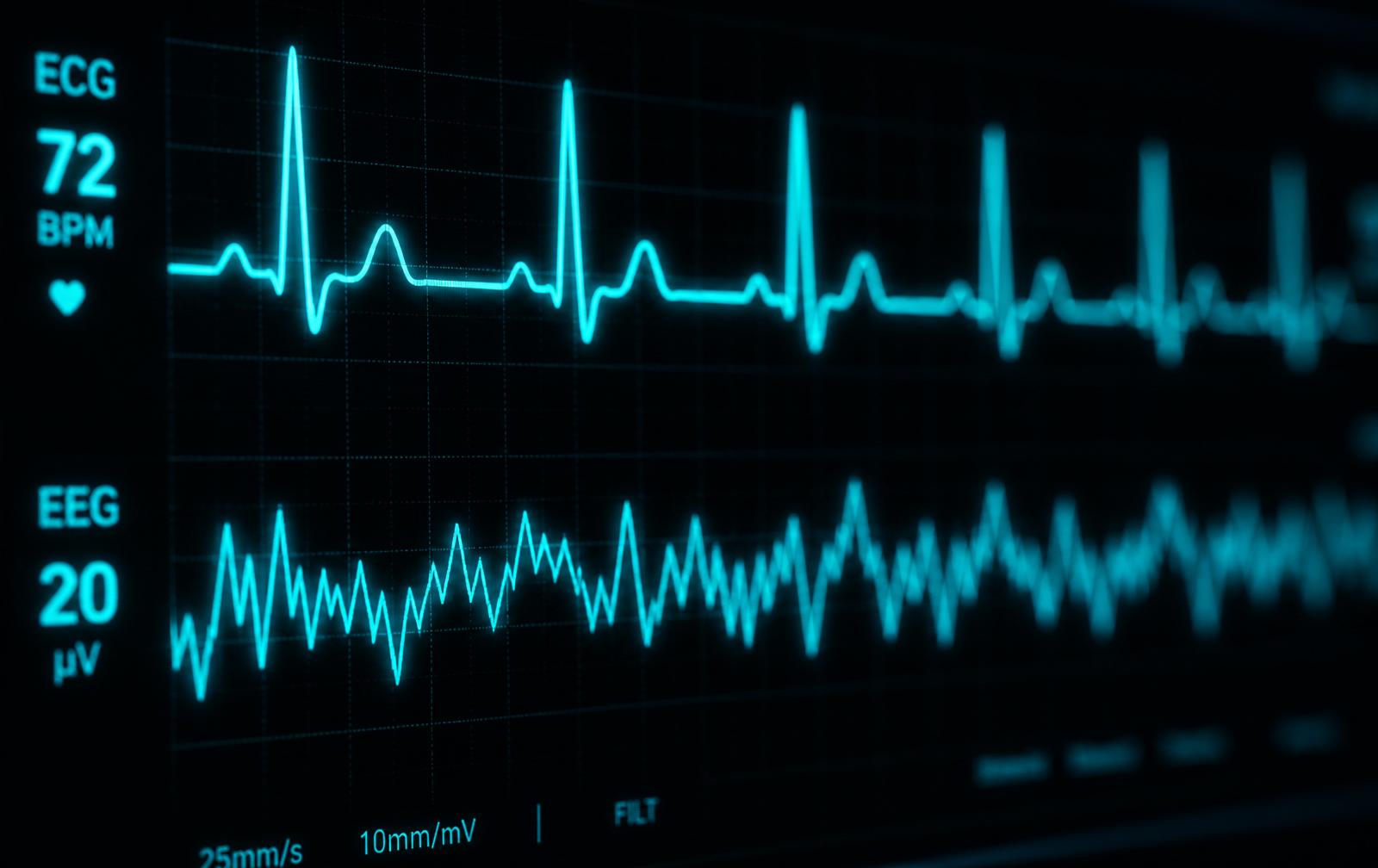
Your sinoatrial node generates the impulse. It travels through atrial tissue in 0.04 seconds, hits the AV node, and fires down to the ventricles. When that signal is disrupted, the rhythm falls apart.
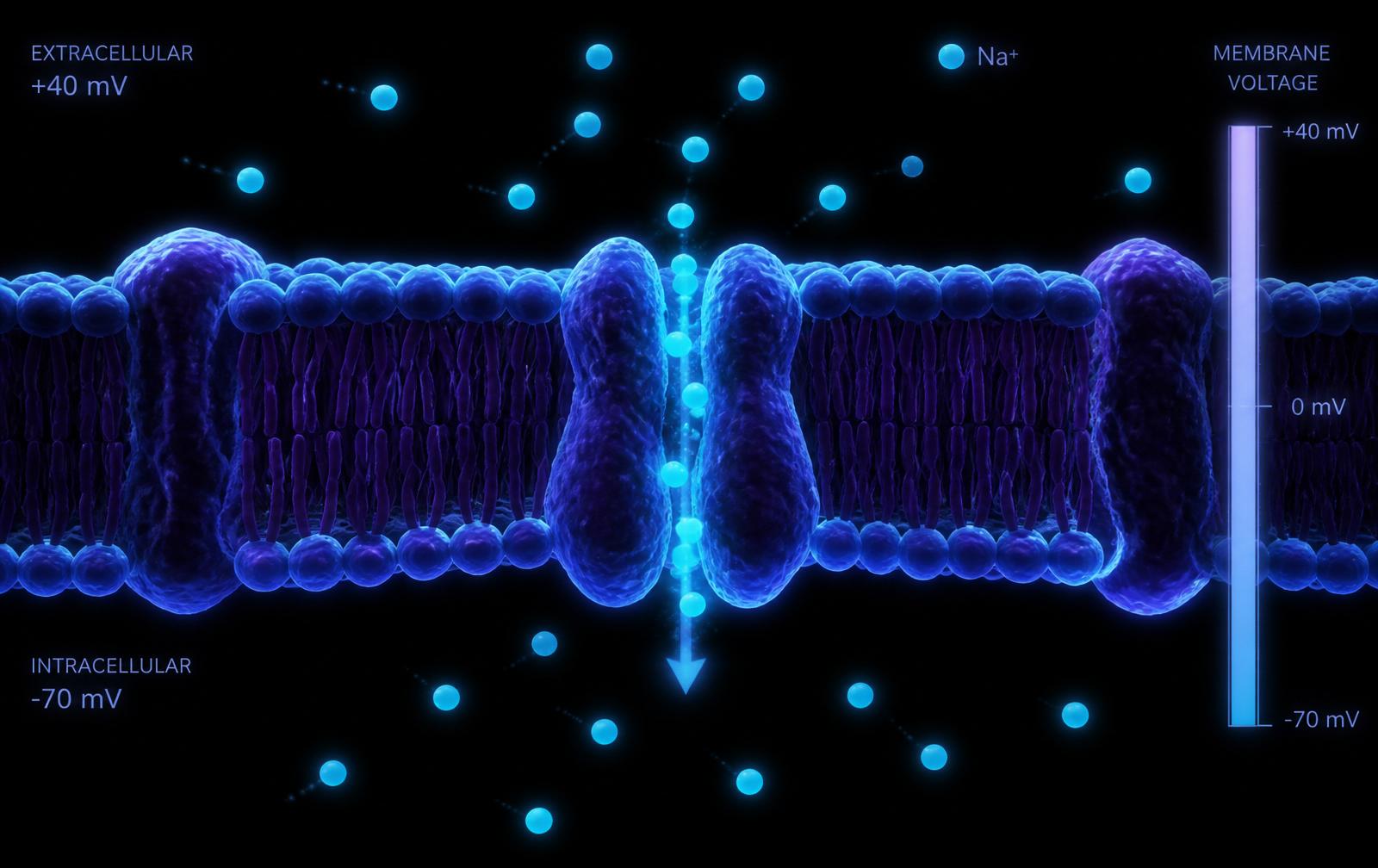
−70 millivolts across every membrane
Your Cells
That voltage controls nutrient absorption, waste removal, cell-to-cell communication, and DNA repair signaling. When cellular voltage drops, cells struggle to function, even with perfect nutrition.
Mitochondrial electron transport chain
Your Metabolism
Electrons move through protein complexes to create the electrical gradient that powers ATP synthesis. No gradient means no energy production, which shows up as fatigue, brain fog, and weakness.
Evidence · The tools your doctor already uses
EKG / ECG
Measures electrical activity of the heart. Standard diagnostic since 1903.
EEG
Records electrical brain activity. Used in neurology since 1924.
Pacemakers
Deliver electrical pulses to regulate heartbeat. Used by millions worldwide.
TENS
Electrical current for pain management. FDA-approved since 1974.
MRI
Electromagnetic fields to image internal structures non-invasively.
02 · Where standard medicine stops
"Normal" doesn't mean optimal.
Can your cells actually use it?
Your thyroid makes the hormone, but the cellular receptors aren't getting the electrical signal to act on it. There's glucose in your blood, but the cells lack the voltage gradient to pull it across the membrane. Standard medicine measures what's there, not whether it's working.
03 · How it works
Frequencies carry information.
Healthy cells vibrate at ~70–90 millivolts. Diseased or damaged cells drop to 15–20. Different tissues resonate at different frequencies. We use specific modalities to communicate directly with cells — every one backed by published research.
Frequencies carry information
01
Light Frequencies
Red and near-infrared wavelengths mitochondria absorb to restore energy production.
Evidence
700+ peer-reviewed studies · 150–200% increase in mitochondrial ATP production
02
Electromagnetic Frequencies
Pulsed signals (PEMF) that restore cellular voltage and membrane potential.
Evidence
NASA: 250–400% tissue repair · 10,000+ studies · FDA-cleared for bone, pain, depression
03
Acoustic & Neurofeedback
Sound patterns and brainwave entrainment that guide the nervous system into optimal states.
Evidence
AAP Level 1 evidence for ADHD · used by Olympic athletes and elite military units
04
Oxygen Enhancement (HBOT)
Hyperbaric oxygen increases cellular oxygen capacity and signal transmission across tissue.
Evidence
20,000+ studies · up to 1,500% increase in tissue oxygen · FDA-approved for 14 conditions
Direct to the cellular level.
No digestion required (like supplements). No blood-brain barrier limitations (like medications). No metabolic conversion needed (like hormones). The signal goes straight to where it's needed.
04 · Trusted by the institutions that demand proof
Not fringe. Foundational.
NASA
U.S. Military
Mayo Clinic
Johns Hopkins
Cleveland Clinic
Pro Sports — NFL, NBA, MLB
05 · What it addresses
Clinical applications across multiple systems.
Brain & Cognitive Function
- Traumatic brain injury recovery
- Cognitive decline
- Brain fog & mental fatigue
- Neurodegenerative conditions
Nervous System & Mental Health
- Anxiety and depression
- PTSD
- Chronic stress patterns
- Sleep disorders
Cellular & Metabolic Health
- Mitochondrial dysfunction
- Chronic fatigue
- Metabolic syndrome
- Hormonal imbalances
Regeneration & Recovery
- Tissue repair & injury healing
- Chronic inflammation
- Autoimmune conditions
- Post-surgical recovery
Cardiovascular & Circulation
- Poor circulation
- Blood pressure dysregulation
- Vascular health optimization
Longevity & Performance
- Biological age optimization
- Athletic performance
- Preventative care
- Executive health optimization
06 · Prevention, not reaction
Most medicine waits until you're sick. We don't.

What we catch early
- Tissue health degradation, before degeneration sets in
- Inflammatory signaling, before chronic disease
- Mitochondrial power decline, before energy crashes
- Nervous system dysregulation, before burnout
- Hormonal activity issues, before major imbalances
07 · From research to The Eckel Protocol®
We don't just read the research. We apply it.
Evidence → diagnostics → The Eckel Protocol®
01
Published Evidence
Peer-reviewed studies demonstrating efficacy for specific conditions and biomarkers.
02
Clinical Outcomes
Real-world results from our patient population, tracked over time.
03
Your Diagnostic Data
Personalized application based on what your tests reveal.
04
Outcome Tracking
Retest and adjust based on measurable results, following research protocols for optimization.